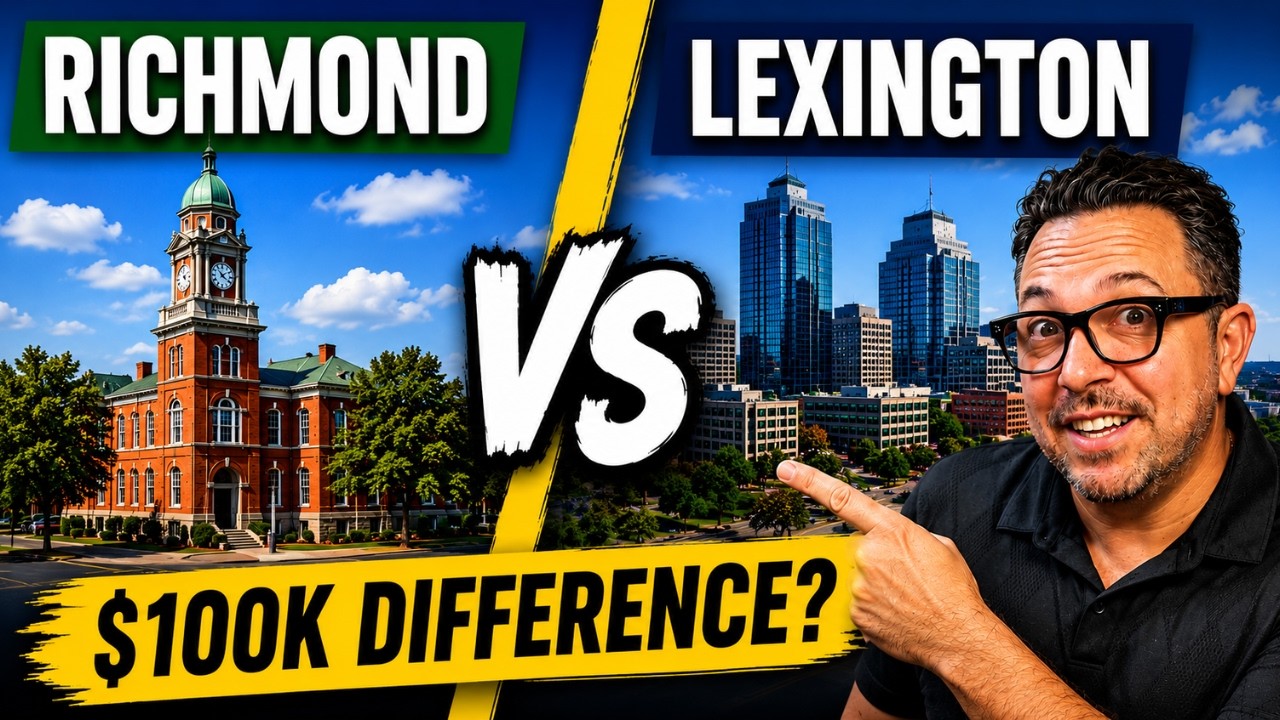
Lexington vs Louisville: Which Kentucky City Should You Actually Move To
Size, prices, cost of living, and commute all differ. Knowing how each stacks up helps you choose.

Central Kentucky’s Strongest Cash Offers. No open houses, no staging, no repairs. Just a fair, all-cash offer. Get a Cash Offer
Relocating to Kentucky usually comes down to two cities: Lexington and Louisville.
Louisville is the bigger city, and on average, homes there cost less than they do in Lexington. On paper, that makes Louisville look like the obvious pick. Yet week after week, I watch people tour both and still choose Lexington.
I want to walk through why, honestly and without any spin, because the right answer genuinely isn’t the same for everyone.
The two cities have very different personalities, and that’s the real starting point. Louisville is the largest city in Kentucky, with a metro population around 1.3 million. It sits on the Ohio River, has a genuine downtown skyline, and feels like a full-size city: more restaurants, more music and nightlife, professional sports and events, and the Kentucky Derby.
Lexington is smaller, with a metro area population of 540,000 and nearly 320,000 in the city. This is the heart of horse country. Drive 10 minutes in almost any direction, and you’re surrounded by black fences and rolling farms. It’s more open, more suburban, and a good deal more laid-back.
So the first honest question is simple: Do you want the energy of a bigger city, or more space and a slower pace? Neither is wrong. They’re just different.
Then there are the numbers, and this is where it gets interesting. In Lexington, the median home price sits right around $350,000, with price per square foot running close to $200. In Louisville, the typical home sells for less, with a citywide median in the mid-$200s to low-$300s and a price per square foot closer to the $160 to $170 range.
For the same money, you can buy a little more house in Louisville, often $50,000 to $70,000 less for a comparable home. That’s a real difference, and I won’t pretend otherwise.
But here’s the part most comparisons skip. When you zoom out to overall cost of living, the two cities are almost a wash, usually within a percent or two of each other depending on which study you read. Louisville is cheaper on housing, while Lexington tends to run a little cheaper on things like healthcare and a few everyday costs. Both cities also have a local occupational tax that comes out of your paycheck, so don’t assume one is tax-free and the other isn’t. They’re closer than the home prices alone suggest.
Commute is the number that matters more than people expect. In Lexington, the average commute is about 21 minutes, and traffic remains light. Louisville is a bigger city with bigger-city traffic, especially on the interstate during rush hour. It isn’t brutal, but you’ll feel the difference, and over a year that adds up to a lot of extra time in the car.
So who is each city actually for? Louisville is probably your city if you want a more urban life, a bigger and more varied job market, and a larger arts, food, and music scene - the feeling of a real city around you. The lower home prices are a genuine bonus, and if your job is there, the decision is basically made.
Lexington leans the other way. It’s the better fit if you want space, an easy pace, and a shorter commute, especially if you’re raising a family and value room to breathe. Plenty of my clients who could comfortably buy in either place still choose Lexington, because day-to-day life here simply feels calmer: less traffic, more green, and a downtown that’s walkable without being overwhelming.
If you have a job offer in one of these cities, take the city with the job. The cost difference isn’t big enough to justify commuting an hour across the state every day. But if your location is flexible and you’re choosing purely on lifestyle, it comes back to that very first question: big-city energy, or open and easy.
One reality check before you pack. Lexington is not a big city, and it doesn’t try to be. If your ideal weekend is a packed calendar of concerts, pro sports, and a huge restaurant scene every night, you may find it quiet at first. Some people love that; some miss the noise, so be honest with yourself about which one you are. Louisville, for its size, is more spread out and more car-dependent than people expect, with the heavier traffic I mentioned.
Neither place is a postcard. They’re both real cities with real trade-offs. But I’ll tell you this: the people who move to Lexington for the pace and the space almost never regret it. They just wish they’d come sooner.
If you’re thinking about buying or selling a home in the Lexington area, I’d love to continue the conversation. Call or text me at 859-721-2200, email bob@nhcnow.com, or visit nhcnow.com.
-
Central Kentucky’s Strongest Cash Offers. No open houses, no staging, no repairs. Just a fair, all-cash offer. Get a Cash Offer
-
What is Your Home Worth. Get an up-to-date real-world home value estimate from a top local real estate agent. Find out how much you could sell for and what timeline to expect.. Request Estimate
-
Start Your Property Search. Central Kentucky’s most up-to-date property search. See all homes for sale on our MLS with photos, schools, prices, and more.. Search Now
-
Free e-Newsletter. Get our real estate Q&A, tips and insights in your inbox.. Subscribe Now